This is a brief update as we have been travelling west at great speed and internet access has been sporadic. The temperature has exceeded 40 degrees for the past few days, so ourselves, the dog, and Geoffrey ( the Winnebago finally has a name) are melting.
As we drive we hear thwack, thump, crash as Winnebago components melt and drop to the ground. The toilet roll holder died a death a few days ago, and the adhesive holding the hooks for our mugs and assorted crockery has raised the white flag. The fridge has shed several components and I suspect that the bed mattresses are several inches thinner.
The plan is to head south along the coast road to Perth while Geoffrey is still semi-intact.
The Bungle Bungles and East Kimberley were phenomenal, and pics are still being processed. Toad-busting did not happen unfortunately, as we felt that we had to move on.
James dog had a good 2 days with the lovely Wendy who volunteered as a dog-sitter, and the bite wounds in her right ear are responding well to antibiotics ( Wendy was not to blame, james dog had a minor altercation with her friend's dog over a kitchen full of food).
We should be in Broome tomorrow, and blogging parameters may be favourable ie we will have reliable internet connection, our pics will have been uploaded, there will be time to blog, and I will be sober.
Saturday, September 13, 2008

Sunday, September 7, 2008
on to western australia
We have crossed another border and are now in WA- this time we managed to eat all our fruit and vegetables and only had a peeled onion and a jar of honey confiscated, although they did search all our lockers for cane toads ( none found).
Last night where we camped we met four lads in a clapped out old van who were distraught at discovering the fruit and vegetable quarantine regulations, and proceeded to consume over $130 worth of fresh provisions they had just purchased as their next week's rations.
We are trying to sort out a few trips from Kununurra to the Kimberleys and the Bungle Bungles ( if only because of the great name), so we are hoping the nice lady we met yesterday who fell in love with james dog really meant her offer to dog sit for a few days. She is a volunteer 'toadbuster' and I am hoping to enlist for a weekend catching cane toads. Ness the batrachophobic kiwi has declined the offer to join in the fun.
 |
| From trek phase 3 |
Friday, September 5, 2008
kakadu and litchfield
 |
| From trek phase 3 |
We reluctantly left Cobourg and returned to Kakadu to spend 2 more days exploring.
Cahill's crossing was rather wetter when we returned across the Arnhem Land border.
 |
| From trek phase 3 |
It was getting hotter and hotter, and very frustrating being surrounded by cool clear water and be unable to risk swimming due to the crocs.
 |
| From trek phase 3 |
So, we went to Litchfield National Park to the west of Kakadu where the biggest attractions are a large number of waterfalls, creeks and plunges pools which are crocodile free ( allegedly). The pleasure of doing a couple of days walking where you can leap into gorgeous cool water to your heart's content was joyful.
 |
| From trek phase 3 |
 |
| From trek phase 3 |
 |
| From trek phase 3 |
 We left Litchfield after 2 days of walking and swimming and went north back to Darwin to collect James dog from her pet resort and she seems in good form. We spent last night catching up with Alan at his wonderful house in a tropical garden setting where we drank to excess and today we are back in Katherine and all set to head west to WA. |
Monday, September 1, 2008
arnhem land continued
So we arrived at base camp adeptly chauffeured along the corrugated dirt roads by the lovely Alan ( 'just because I like flowers doesn't mean I am gay'). His knowledge of the native flora and fauna was widespread, and he knew a lot about termite mounds as well.

Those Toyota Land Cruisers really can handle the terrain well, and we chose to ignore Al's tales of driving into trees and jack-knifing the trailer on past tours.

Camp was basic but comfortable, and we learned a great deal about crocodiles, bush craft and bush tucker from Brendan, including how to suck red wine through a Tim Tam ( a chocolate coated cream biscuit similar to a Penguin) by biting off the opposing corners. Essential for survival in these harsh environs.
Vanessa managed several dips in the ocean while the more sensible members of the group looked out for crocs and I cursed the cancellation of our cross-life insurance policies. She also captained the boat and managed not to run us aground on a reef, and caught a large golden trevelly and 2 small sharks from the rocks using a hand line baited with mackerel.
No pics available because I was asleep in our tent, and Jo on croc watch at the top of the cliff had dozed off in her hammock so Ness's screams of 'get a camera, I have caught a fish' went unheard. Just as well she was not yelling ' Save me I am being eaten by a crocodile' I suppose.
Those Toyota Land Cruisers really can handle the terrain well, and we chose to ignore Al's tales of driving into trees and jack-knifing the trailer on past tours.
Camp was basic but comfortable, and we learned a great deal about crocodiles, bush craft and bush tucker from Brendan, including how to suck red wine through a Tim Tam ( a chocolate coated cream biscuit similar to a Penguin) by biting off the opposing corners. Essential for survival in these harsh environs.
 |
| From trek phase 3 |
 |
| From trek phase 3 |
No pics available because I was asleep in our tent, and Jo on croc watch at the top of the cliff had dozed off in her hammock so Ness's screams of 'get a camera, I have caught a fish' went unheard. Just as well she was not yelling ' Save me I am being eaten by a crocodile' I suppose.
 |
| From trek phase 3 |
Sunday, August 31, 2008
port essington
We all went out on the boat looking for marine creatures. Apart from the abundant crocodiles we also spotted a snub-nosed dolphin, sea turtles and manta rays.
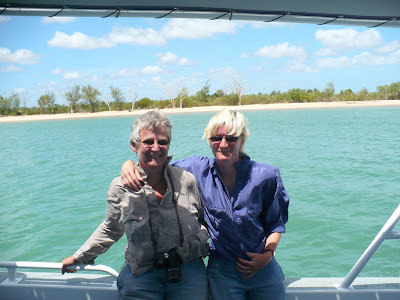
Our destination was the abandoned ruins at Port Essington, also known as Port Victoria. The story of this port is a classic tale of the Brits and their bungled attempts to settle on the northern coastline of Australia.
The peninsula was named by the explorer Phillip Parker King ( the chap who mistook crocodiles for alligators ) after Queen Victoria's uncle, Prince Leopold of Saxe-Cobourg. King also named the bay Port Essington after his friend Vice Admiral Sir William Essington, so he was a bit of a sycophant as well as misguided.
The impulse to settle the northern extremity of Australia was largely driven by the prospect of a rival French settlement. There were three unsuccessful British settlements in the area. Problems were caused by monsoonal weather, voracious wildlife, very unfriendly local Aborigines, and the lethargy which inevitably affects Europeans who try to work in the tropics.
Port Essington was actually chosen as the site of the first settlement but when the organising party, led by Captain J. J. Gordon Bremer, arrived in 1824 they found that there was no fresh water and so, after three days, they moved to Melville Island where the settlement at Fort Dundas was established. This lasted a mere four years before scurvy, tropical diseases, lack of fresh supplies, and antagonistic Aborigines forced it to be abandoned.
In 1827 a second attempt at a settlement was made by Captain James Stirling at Raffles Bay. The history of the settlement was a carbon copy of the problems at Fort Dundas and closed down after two years
You would assume that they would be getting the message by now, but far from it- off they went again......
In 1837 the British government decided to try again and a settlement was established at Port Essington . In 1838 Captain J. J. Gordon Bremer (who, by this time, must have been convinced that he was really out of luck when it came to leading expeditions) arrived at Port Essington.
In the first 12 months the settlement, which had comprised of a hospital, officers quarters and 24 cottages had been a mixture of prefabricated buildings brought from Sydney and cottages built from local materials but lacking any real skill as the builders were amateurs. It would have been too much to bring some qualified construction workers obviously.
The settlement was virtually wiped out by a cyclone in November, 1839 which meant that they had to start all over again.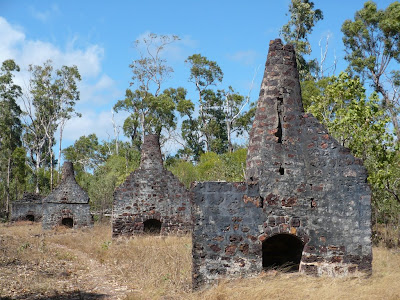
The second phase involved the rebuilding of the settlement but this time the builders were assisted by a brick maker who had been shipwrecked during the cyclone ( unlucky sod!). The result was a mixture of local materials with stone chimneys and some brick buildings including fortifications and a baker's oven.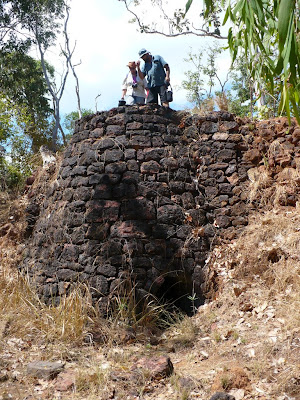
The final phase of building occurred in 1844 when a group of convicts including trained masons and quarry men were stationed briefly at Port Essington. The skills of these tradesmen resulted in a beacon and a sophisticated hospital but it was all too late. The settlement was abandoned in 1849 and today it is nothing more than a collection of ruins.
The 2 hour walk around the settlement in light cotton clothing was sweltering, so it is easy to see how the residents in their heavy woollen uniforms and clothing failed to thrive. We had a welcome break in the partial shade sitting on all their tombstones.
Thomas Huxley passed through the settlement just before it closed down in 1849 and left a graphic description of the sheer awfulness of Port Essington describing it as 'the most wretched, the climate the most unhealthy, the human beings the most uncomfortable and houses in a condition most decayed and rotten.'
gunbalanya; injalak hill art
Before reaching the national park we stopped at Gunbalanya to climb a few more rocks and see some more Aboriginal art. We needed a guide for this one as we climbed deeper and deeper through chasms and over ravines.With our sense of direction I suspect we would still be there without Simon's assistance.
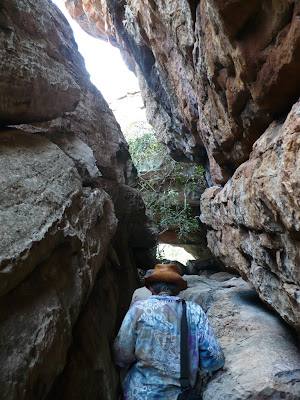
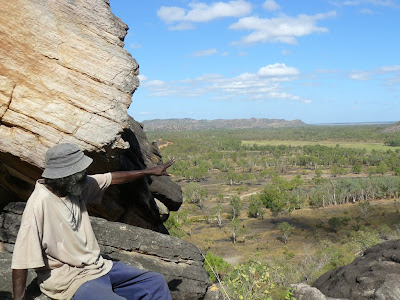
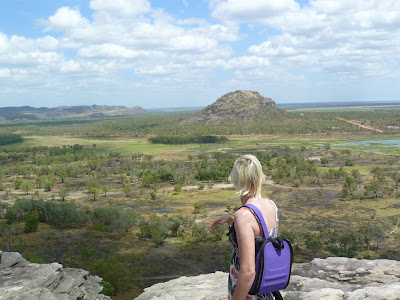
There is so much fine rock art in Arnhem land, seen by very few people.

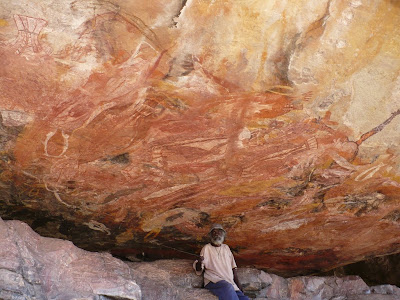
There is so much fine rock art in Arnhem land, seen by very few people.
cobourg peninsula-garig gunak barlu national park
We have returned from the Cobourg peninsula after an amazing few days about as far from the madding crowd as possible.
It is always a good idea to broaden one's horizons by doing these groups tours and meet fellow travellers from all over the world, so we hooked up with Jo from Melbourne and Phillip from Mudgee!
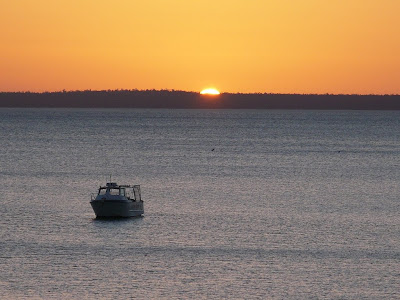
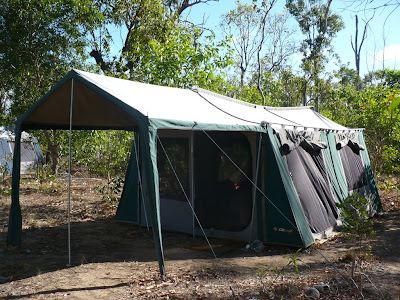
The view from our tent was not too bad:
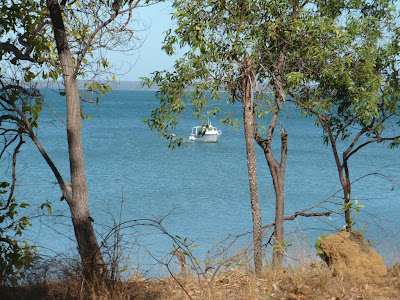
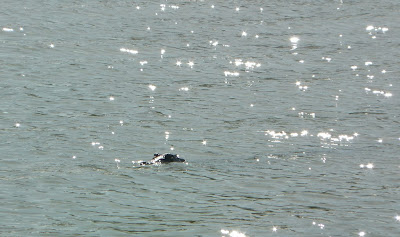
The other residents of this tropical paradise did prevent us from enjoying any ocean swimming:
Much more to write about the trip, but as we are off again this morning to see more of Kakadu I will post later on this week.
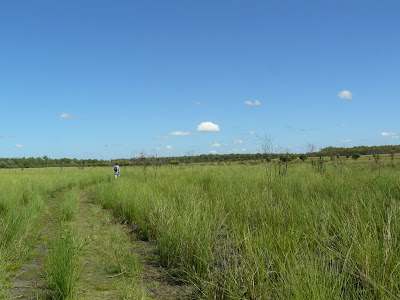
Meanwhile, I fear that Ness has gone completely feral and that we may never see another town or city again.
The Coburg Peninsula is home to some of the best reef and tropical sports fishing in the world. The spectacular wilderness of Garig Gunak Barlu National Park encompasses almost all of Cobourg Peninsula. The park preserves the peninsula’s sandy beaches, dunes and associated coastal grasslands, mangroves, rainforest patches, swamps, lagoons, coral reefs, sea grass meadows and rich marine life.
The peninsula is two sailing days from Darwin ( 150 nautical miles ) and 1-2 days in a 4WD ( road access is only possible from May to October). Visitors to the area are restricted to a maximum of 20 vehicles at any one time (we saw 1 other while we were there).It is always a good idea to broaden one's horizons by doing these groups tours and meet fellow travellers from all over the world, so we hooked up with Jo from Melbourne and Phillip from Mudgee!
The view from our tent was not too bad:
The other residents of this tropical paradise did prevent us from enjoying any ocean swimming:
Much more to write about the trip, but as we are off again this morning to see more of Kakadu I will post later on this week.
Meanwhile, I fear that Ness has gone completely feral and that we may never see another town or city again.
Subscribe to:
Posts (Atom)